
War in the Gulf Interrupts the 2Africa Network and the Bandwidth Africa Awaits
A subsea network built to carry Africa’s digital future runs into the older forces that still shape the oceans above it

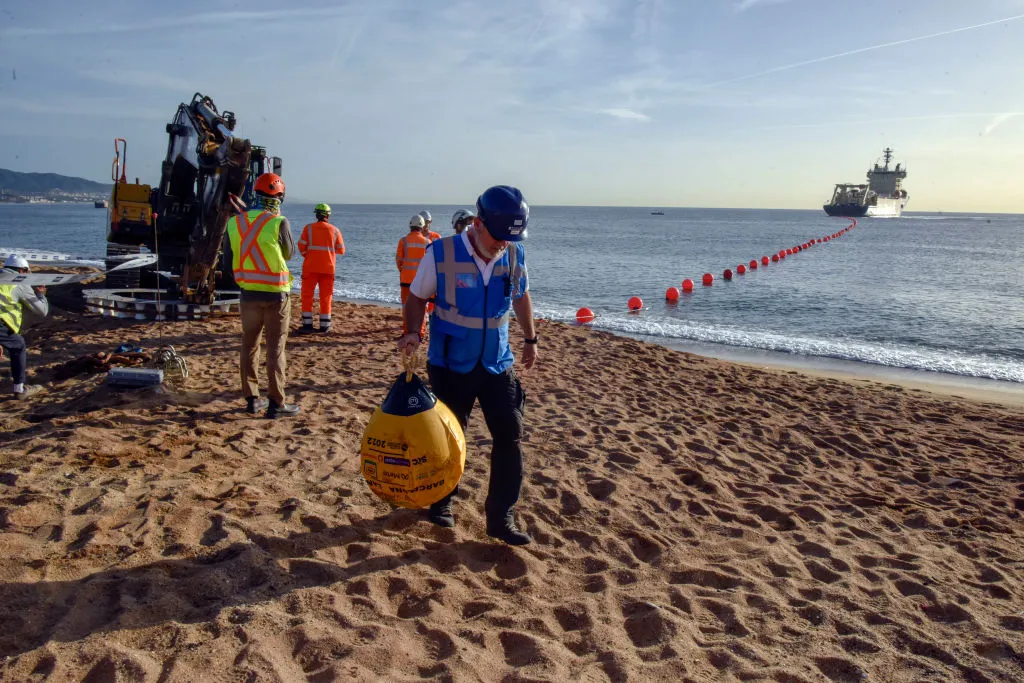
The 2Africa submarine cable, the largest subsea internet network ever attempted, has run into the realities of maritime conflict. Construction of the 45,000 kilometer system has stalled in the Persian Gulf after military activity made it unsafe for installation vessels to continue operations.

The disruption affects the “Pearls” segment of the route, a section intended to connect landing stations across Oman, the United Arab Emirates, Qatar, Bahrain, Kuwait, Iraq, Pakistan, India, and Saudi Arabia. Much of the fiber already rests on the seabed. What remains is the final stage: connecting the cable to coastal landing points and activating the route.
For most internet users, the infrastructure carrying global data traffic remains largely invisible. It becomes visible only when something interrupts it. The pause in the 2Africa submarine cable construction offers a rare view into how exposed that physical network can be.
A Network Designed to Encircle Africa
The 2Africa submarine cable is designed as a 45,000 kilometer ring linking Africa, Europe, and parts of the Middle East through dozens of coastal landing stations. When complete, the network will form the largest subsea fiber system ever deployed.
Submarine cable projects rarely attract public attention during construction. Their effects emerge gradually once traffic begins flowing through the network. Additional capacity tends to lower wholesale bandwidth costs and give internet providers more options when routing data between continents.
Across Africa, the cable is expected to deepen connectivity between coastal landing stations and inland digital markets. As cloud infrastructure expands and streaming services consume greater volumes of bandwidth, these high-capacity routes become central to how national networks handle international traffic.

Completion of the ring would strengthen links connecting African internet exchanges with Europe and Asia. One unfinished segment, however, now sits inside a volatile maritime corridor.
Cable Ships Cannot Work Inside Active Maritime Conflict
Installing subsea fiber requires a narrow set of operating conditions.
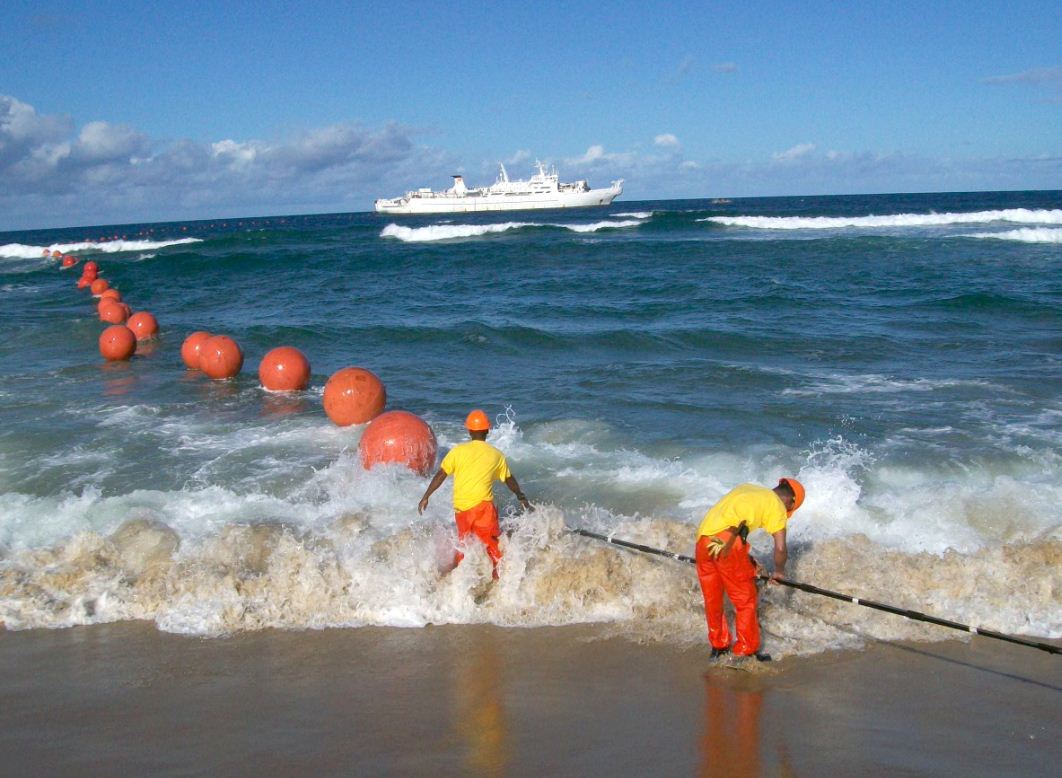
Cable ships move slowly along predetermined routes while releasing fiber from large onboard tanks. In areas exposed to fishing or shipping activity, mechanical plows bury the cable beneath the seabed for protection. Engineers track seabed terrain and currents continuously during installation.
Military activity introduces risks that construction planning cannot absorb.
Alcatel Submarine Networks, the contractor responsible for laying portions of the cable, has issued force majeure notices to consortium partners after security conditions deteriorated in the Persian Gulf. The declaration effectively suspends contractual obligations tied to installation schedules.
One of its cable-laying vessels, the Ile De Batz, now sits near Dammam in Saudi Arabia after operations halted.
Installation vessels operate under strict safety protocols. They cannot remain on route in waters where missile launches, naval patrols, and air operations intersect with construction zones.
Infrastructure work pauses long before civilian ships are exposed to that level of risk.
War Leaves Technical Uncertainty Beneath the Waterline
Even if hostilities ease, the return to normal operations may take time.
Missiles intercepted over the Persian Gulf have fallen into surrounding waters. Some may remain unexploded on the seabed. Subsea infrastructure engineers treat such hazards with extreme caution.
Before cable work resumes, survey vessels would likely need to remap sections of the route. Unexploded ordnance or debris could require removal or adjustments to the cable path before installation continues.
Under normal conditions, seabed surveys occur years before deployment begins. Engineers rely on those maps to avoid geological hazards and maintain stable burial depths for fiber lines.
Conflict undermines that certainty. The seabed itself becomes a location that must be reassessed before construction can move forward again.
Two Global Cable Corridors Now Under Pressure
The Persian Gulf disruption follows earlier problems along another critical route.
Construction on a portion of the 2Africa submarine cable running through the Red Sea halted months earlier after attacks on commercial shipping and subsea infrastructure linked to Houthi forces. Several existing cables in that corridor sustained damage during incidents reported in early 2025.
Repairs required months of coordination because cable ships could not safely access the affected routes.
Taken together, the Red Sea and the Persian Gulf form two of the narrowest corridors in the global subsea network linking Europe, Africa, and Asia. When instability affects both passages, redundancy inside the system begins to narrow.
Traffic continues to move through other cables and terrestrial routes across the Arabian Peninsula. Those alternatives often carry less capacity and longer transmission paths.
Connectivity survives. Efficiency weakens.
The Infrastructure Carrying the Internet
More than 95 percent of global internet traffic travels through submarine cables. Satellites support certain communications services, yet the bulk of digital data flows through fiber lines resting on ocean floors.
Over 500 cable systems form the backbone of that global network. Most follow routes shaped by geography and trade rather than technology alone. They converge near coastal hubs where international bandwidth enters domestic telecom systems.
This architecture functions well during stable periods.
When conflict emerges along major maritime routes, the underlying network reveals its dependence on physical geography.
Digital services may appear detached from territory, yet the cables carrying those services remain tied to specific waters and coastlines.
Technology Firms Start Reconsidering Route Geography
The disruption affecting the 2Africa submarine cable reflects a broader reassessment across the subsea infrastructure industry.
Technology firms and telecom consortiums have begun exploring cable routes that bypass traditional chokepoints in the Middle East. One proposed system, known as Project Waterworth, would connect the United States, India, South Africa, and Brazil through longer ocean paths across the Atlantic and Indian Oceans.
Longer routes require more equipment and greater capital investment. They also extend construction timelines.
Yet avoiding unstable maritime corridors may justify those costs.
Other cable projects have encountered similar delays. The Sea-Me-We 6 system has slowed development amid the same regional tensions, while a separate cable initiative overseen by Ooredoo has paused during the current security environment.
Infrastructure planners increasingly factor geopolitical volatility into route design.
Africa’s Bandwidth Expansion Continues Despite the Pause
The construction halt does not erase the long-term role of the 2Africa submarine cable.
Demand for international bandwidth across Africa continues to grow as mobile internet usage expands and digital services move deeper into everyday economic activity. New data centers are appearing in cities such as Nairobi, Lagos, and Johannesburg, increasing the need for stable high-capacity connections to global networks.
Submarine cables determine how efficiently those connections operate. When additional systems enter service, wholesale bandwidth markets often become more competitive and network resilience improves.
Those changes unfold gradually.
For now, the unfinished segment in the Persian Gulf stands as a reminder that even the most ambitious digital infrastructure still relies on conditions far beyond the control of engineers or investors.
The Physical Internet Meets Political Geography
The story of the 2Africa submarine cable reveals a simple but often overlooked reality.
The internet is not weightless.
Its infrastructure includes fiber strands laid across seabeds, landing stations built along exposed coastlines, and installation vessels navigating crowded maritime corridors. Those elements sit directly inside the same geopolitical landscape that shapes shipping lanes, naval deployments, and regional conflicts.
For decades the subsea cable industry operated with the assumption that commercial infrastructure would remain largely insulated from military escalation.
Recent disruptions challenge that assumption.
The cables remain on the seabed. The forces determining when they can be finished lie above the waterline.
Go to TECHTRENDSKE.co.ke for more tech and business news from the African continent and across the world.
Follow us on WhatsApp, Telegram, Twitter, and Facebook, or subscribe to our weekly newsletter to ensure you don’t miss out on any future updates. Send tips to editorial@techtrendsmedia.co.ke


