
As Formal E-Commerce Struggles for Reach, Messaging Apps Are Becoming the Place Where Business Gets Done
Commerce across the continent is slowly reorganizing itself around everyday conversation

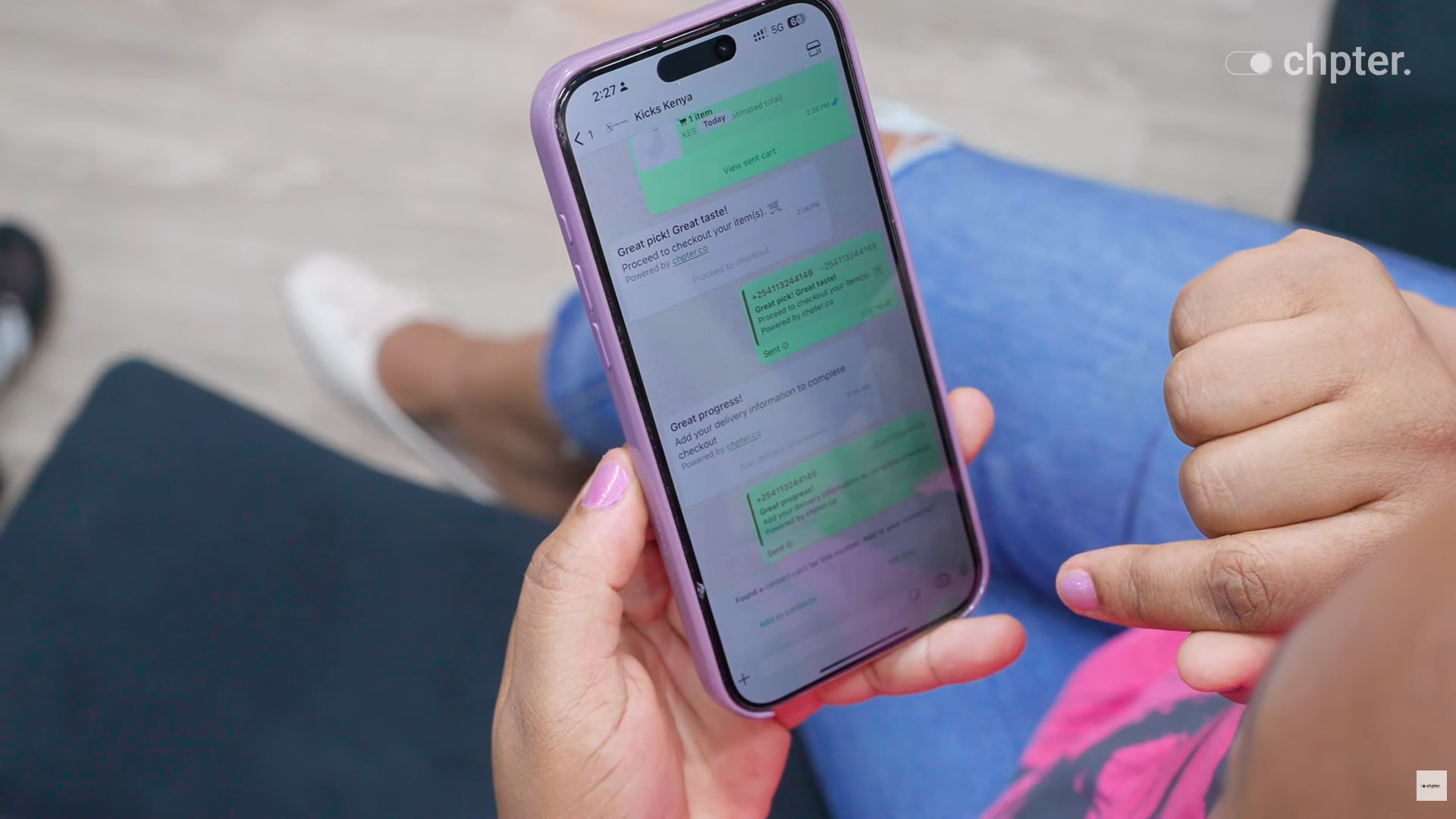
WhatsApp is becoming Africa’s commerce infrastructure. Across cities and smaller towns from Lagos to Nairobi, thousands of merchants run daily business operations inside chat threads rather than websites or retail platforms.

The messaging service owned by Meta now functions as an operational layer for small commerce. Product discovery, negotiation, payments coordination, and customer service frequently occur within the same message conversation. In many markets, that thread has replaced the traditional online storefront.
African retail operates through direct communication between buyer and seller. Messaging applications replicate that structure in digital form while avoiding the cost and complexity of formal e-commerce systems.
The outcome is visible in everyday transactions. A customer sends a message asking about price or availability. The merchant responds with photos or voice notes. Payment instructions follow, often through mobile money. Delivery arrangements close the exchange. No checkout page appears. No online cart. The commerce infrastructure is simply a conversation.


Retail inside the chat window
The modern African online store often looks like a WhatsApp conversation. Sellers post products on Instagram or TikTok, then redirect buyers into messaging threads where negotiation and payment coordination happen in real time.
This pattern reflects long-standing retail habits rather than a sudden digital innovation. Informal commerce dominates much of the continent’s retail sector. According to the International Finance Corporation, roughly 90% of businesses in Sub-Saharan Africa operate as small or informal enterprises. Most do not run websites or structured digital storefronts.

Messaging applications fill the gap. They allow merchants to manage customer inquiries, negotiate prices, and track repeat buyers without investing in technical infrastructure. The same chat thread functions as sales desk, customer record, and service channel.
The arrangement carries a certain familiarity. Retail across African markets has always been conversational. Buyers ask questions. Sellers respond. Prices adjust. Delivery gets discussed. WhatsApp simply moves that pattern onto the smartphone.
Large e-commerce platforms exist across the region. Companies like Jumia operate structured marketplaces. Yet many smaller sellers remain outside those systems because the operational requirements feel too heavy for a business run from a phone.
Chat commerce asks less. A smartphone. A contact list. A stream of incoming messages.
The infrastructure behind the conversation
At first glance, a WhatsApp transaction looks informal. Underneath, however, sits a growing network of payments infrastructure, automation software, and platform integrations.
Mobile money plays a central role. Services such as M‑PESA, operated by Safaricom, allow merchants to receive digital payments without conventional bank terminals. While Kenya’s interbank settlement system (KEPSS) processes over KES 40 trillion annually, the Central Bank of Kenya reports that mobile money transactions for January 2026 totaled KES 699.64 billion, putting the year on track for a total valuation of approximately KES 8.5 trillion.
Payment confirmation often arrives inside the same messaging thread where the sale started. The buyer sends a payment notification. The seller acknowledges receipt. The order moves forward.
Startups have begun building software around this routine. Payment providers like Flutterwave and Paystack connect merchants to card and bank payment rails. Messaging automation companies build tools that organize conversations, track orders, and respond automatically to customer questions.
A new commerce stack has emerged. Messaging at the surface. Payments underneath. Software infrastructure linking the pieces together.
The result does not resemble traditional online retail architecture. It behaves more like a distributed marketplace spread across millions of individual chat threads.
A Kenyan startup illustrates the new layer forming around chat
The abstract idea becomes clearer when examining one company building inside this messaging economy.
Chpter began as a simple WhatsApp automation tool. Businesses used the software to manage incoming messages and respond to customer inquiries. Over time, the product expanded into something closer to a commerce operating system.
The turning point arrived through the Safaricom Spark Accelerator, operated by CcHUB in partnership with iHub. Participation in the accelerator connected Chpter directly with the telecom infrastructure that powers much of Kenya’s digital economy.
The company integrated with M-PESA’s Daraja Open APIs, allowing merchants to initiate Customer-to-Business payment requests directly inside WhatsApp conversations. Buyers no longer needed to leave the chat window to complete a purchase.
Partnerships with Absa Bank and Co‑operative Bank of Kenya enabled automated payment reconciliation. The platform verifies transactions and links them to customer orders within a merchant dashboard.
Chpter raised $1.2 million in pre-seed funding, with backing from Techstars, Norrsken Foundation, and Renew Capital. Investor Ken Njoroge of PANI led the round.
Chpter’s client base ranges from large institutions to fast-growing digital merchants, a mix that helps explain why investors view the company as a potential backbone of Africa’s chat-based commerce. Enterprises such as NCBA Bank, Britam, Decathlon, and Safarilink Aviation use the platform to handle customer conversations, marketing, and payments directly inside messaging apps, while consumer brands like Lintons Beauty World and Victoria Home Store rely on it to convert social media inquiries into completed purchases.
Alongside these larger accounts sits a far bigger pool of small and mid-size merchants who run entire storefronts through messaging channels such as WhatsApp and Instagram. That combination gives Chpter a strategic foothold across the full spectrum of digital commerce.
Investors see the company less as a typical software vendor and more as connective tissue in an economy where conversations double as checkout counters. As more African businesses treat messaging threads as the front door to retail, the software layer that manages those interactions, payments, and orders begins to look less like a niche tool and more like infrastructure.
The company now supports merchants across 11 African countries. Many use automated WhatsApp agents that shorten the time between customer inquiry and completed purchase.
The example illustrates a broader trend inside African technology investment. Infrastructure startups attract attention because their tools enable thousands of small businesses simultaneously.
Expansion across regions reveals how messaging commerce travels
Chpter’s expansion map mirrors the geography of messaging commerce across Africa.
East Africa formed the initial base. Countries including Kenya, Uganda, and Tanzania already rely heavily on mobile money. Integration between messaging and payments therefore happens quickly.
West Africa presents a different configuration. Payment volumes remain high, yet card transactions and bank transfers play a larger role than mobile money. Chpter partnered with Flutterwave to process transactions in Nigerian naira and Ghanaian cedi.
Southern Africa follows another path. South African retailers increasingly adopt conversational customer service tools connected to Instagram and WhatsApp business accounts. Messaging serves as both support channel and sales entry point.
These regional differences matter because messaging commerce adapts to local financial infrastructure. Mobile money dominates one market. Card payments dominate another. The chat interface remains constant.
Commerce simply flows through whichever payment rail already exists.
Platform dependence introduces a structural risk
The system operates at scale, yet it rests on a single global messaging platform.
WhatsApp belongs to Meta. Businesses that rely heavily on the application therefore depend on policies determined outside the continent. Access to messaging APIs, pricing for business messages, and platform governance rules originate from Meta’s internal decisions.
Regulators across multiple jurisdictions have begun examining the market influence of large digital platforms. The European Commission and other competition authorities study how messaging ecosystems affect digital markets.
African regulators face a related challenge. A growing portion of local commerce operates through infrastructure they do not directly oversee. Payment systems fall under national financial regulators. Messaging platforms do not.
The arrangement creates a layered dependency structure. Local merchants depend on software startups. Those startups depend on messaging APIs. The APIs depend on policies determined by a global technology company.
This structure will likely draw closer attention from policymakers as messaging commerce expands.
Payments, logistics, and the invisible infrastructure
Messaging alone cannot complete a commercial transaction. Payment systems and delivery networks fill the remaining steps.
Mobile money services across East Africa integrate easily with messaging workflows. A merchant sends payment instructions. The buyer transfers funds through a mobile wallet. Confirmation appears in the chat.
In Nigeria and Ghana, bank transfers perform the same role. The messaging platform becomes the communication channel linking customer, merchant, and payment system.
Delivery logistics follow a similar pattern. Courier companies coordinate pickup and drop-off through chat threads. Customers track orders through updates sent directly to their phones.
The process lacks the polish of traditional e-commerce dashboards. Yet the system functions efficiently because each component relies on tools already embedded in daily digital life.
Communication sits at the center. Infrastructure forms around it.
A commerce structure built around conversation
Messaging commerce does not resemble traditional online retail. It feels closer to the informal market environment common in many African cities.
Negotiation happens through conversation. Product questions appear before purchase. Customers build relationships with sellers over time.
Technology simply extends that familiar interaction into the digital space.
Retail therefore develops along a path shaped by communication rather than catalog browsing. Businesses respond to questions directly instead of relying solely on static product pages.
This structure can scale surprisingly far. Large retailers now manage thousands of simultaneous customer conversations through automated messaging tools and support teams.
Commerce moves through dialogue rather than a checkout button.
The next stage of African digital retail may not look like e-commerce
Many early forecasts assumed African online retail would eventually resemble Western e-commerce platforms. A website. A checkout page. A centralized marketplace.
Reality has taken a different route. Retail activity increasingly begins with a message and ends with a payment confirmation inside the same conversation.
Infrastructure companies are adapting to that reality rather than attempting to replace it. Payments integrate with chat threads. Automation software organizes conversations. Logistics companies connect delivery networks to messaging platforms.
The result is not a conventional online marketplace. It resembles a vast network of small merchants conducting digital commerce through everyday communication tools.
The system remains messy, decentralized, and surprisingly resilient. And it keeps expanding.
Go to TECHTRENDSKE.co.ke for more tech and business news from the African continent and across the world.
Follow us on WhatsApp, Telegram, Twitter, and Facebook, or subscribe to our weekly newsletter to ensure you don’t miss out on any future updates. Send tips to editorial@techtrendsmedia.co.ke


