
Nyota Initiative Funding Reaches Sh4.8bn as Sh1.06bn Exposure Emerges
The government widens the safety net for youth enterprise, knowing some of it will tear under pressure

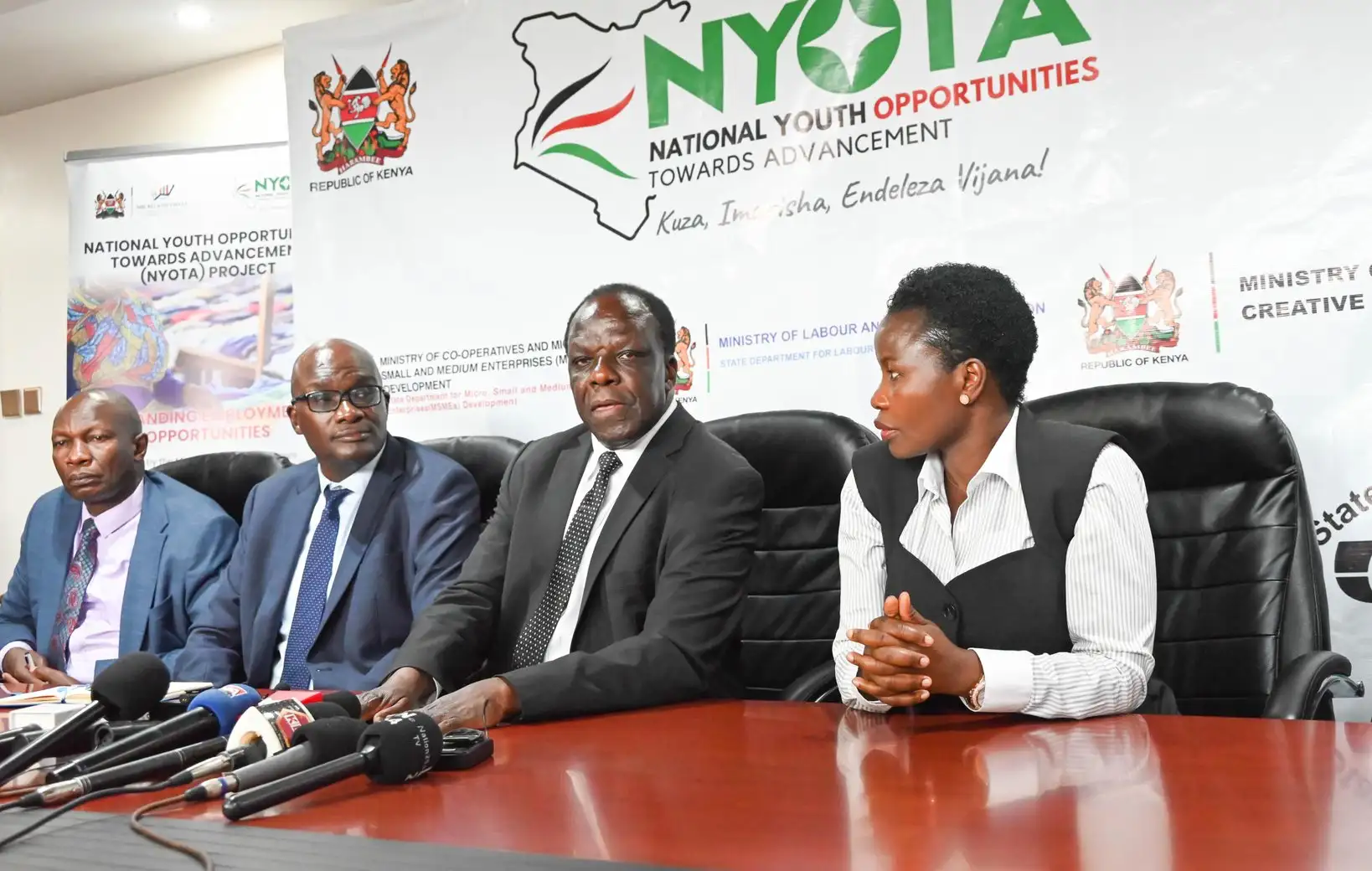
Nyota initiative funding has risen to Sh4.8bn after the National Treasury increased allocations in a mini-budget that tripled beneficiaries to 50,000.

The Nyota initiative is a World Bank-backed youth enterprise and skills programme administered by the Ministry of Cooperatives and Micro, Small and Medium Enterprises Development in Kenya. The National Treasury increased funding from Sh1.44bn to Sh4.8bn for the fiscal year ending June 2026. Total programme financing stands at Sh33bn through December 2028. The government is prioritising scale despite measurable enterprise failure risk.
The World Bank is financing Sh29.5bn of the Sh33bn envelope, including Sh25.8bn in loans. The programme targets 820,000 youth aged 18 to 29 across Kenya.
Public capital is being deployed rapidly into early-stage enterprises with limited survival history. Fiscal exposure now depends on measurable enterprise durability rather than disbursement volume.
Execution discipline will determine whether debt-backed funding produces lasting employment.
Why did the National Treasury increase Nyota funding to Sh4.8bn?
The National Treasury increased Nyota initiative funding to Sh4.8bn to expand beneficiaries from 17,500 to 50,000 within 1 fiscal year. The adjustment was formalised in the 2025/2026 mini-budget.

Initial allocation stood at Sh1.44bn. An additional Sh3.38bn raised annual funding to Sh4.8bn. Implementation is nationwide under the Ministry of Cooperatives and Micro, Small and Medium Enterprises Development.
The expansion reflects pressure to demonstrate youth employment absorption amid elevated unemployment among 18 to 29-year-olds. Enlarging the beneficiary base before verified cohort survival data increases fiscal exposure per budget cycle.
Oversight capacity, beneficiary vetting, and post-disbursement monitoring now carry greater operational weight.
How is the Sh33bn Nyota programme financed?
The Nyota initiative is financed through a Sh33bn envelope, with Sh29.5bn provided by the World Bank, including Sh25.8bn in loans. The Government of Kenya funds the remaining balance.
The programme runs until December 2028. The Sh25.8bn loan component forms part of Kenya’s sovereign debt stock. Disbursement and reporting obligations are tied to World Bank project frameworks.
Youth enterprise grants are therefore partially debt-financed. Enterprise failure rates translate indirectly into sovereign repayment pressure.
Long-term fiscal value will depend on whether funded enterprises formalise, pay taxes, and generate employment within the programme horizon.
How much capital actually reaches youth businesses?
Of the Sh6bn allocated for 120,000 business beneficiaries, Sh5.28bn reaches enterprises after mandatory deductions. Sh720m is automatically redirected to National Social Security Fund savings.
Each beneficiary is allocated Sh50,000 in startup or expansion capital. The first tranche includes Sh22,000 in working capital and Sh3,000 transferred directly to National Social Security Fund accounts. A second tranche follows after 2 months subject to programme conditions.
The automatic savings deduction reduces immediate liquidity. For micro-enterprises operating on narrow margins, Sh3,000 represents inventory or operating buffer.
Enterprise survival will depend on whether the remaining working capital sustains stock cycles, rent obligations, and cash flow within the first 6 months.
How much public money is exposed under a 20% failure projection?
A 20% enterprise failure rate implies approximately Sh1.06bn of the Sh5.28bn business capital allocation could be lost. This estimate is derived from the government’s stated 80% survival target.
At 120,000 funded enterprises, a 20% failure rate equals 24,000 business closures. Applying 20% to Sh5.28bn results in Sh1.056bn in exposed public capital. The projection applies to business grants disbursed nationwide.
The estimate reflects fiscal arithmetic rather than audit loss. Since grants are not repayable, failure represents capital attrition rather than default.
Final fiscal cost will depend on actual survival rates and secondary economic activity generated by surviving enterprises.
What success rate does the government expect?
The government projects an 80% survival rate, with internal estimates ranging between 50% and 80%. These projections were communicated by the Micro, Small and Medium Enterprises State Department.
The programme supports 120,000 business beneficiaries, 600,000 youth in digital access training, 90,000 youth in employability skills development, and 20,000 certification recipients. Mentorship support lasts approximately 2 months after funding.
Kenya’s micro and small enterprise mortality rates historically exceed formal projections. An 80% survival target assumes short-term mentorship can offset structural market pressures.
Verified cohort tracking over 3 years will determine whether projections align with realised enterprise performance.
How is Nyota distributed across Kenya’s wards?
Nyota allocates approximately 70 to 84 beneficiaries per ward across Kenya’s 1,450 wards. The distribution model is spatial rather than sector-specific.
Multiplying 70 beneficiaries across 1,450 wards produces 101,500 enterprises. At 84 per ward, the figure reaches 121,800 enterprises, aligning with the 120,000 business capital target.
The ward-based allocation spreads opportunity geographically but dilutes capital concentration. Local demand conditions and infrastructure gaps vary widely across counties.
Economic impact will likely be uneven, with stronger effects in wards that already possess trading networks and consumer demand depth.
Key Facts
What is the total value of the Nyota initiative?
The Nyota initiative is valued at Sh33bn and runs until December 2028 in Kenya. The World Bank finances Sh29.5bn of that total, including Sh25.8bn in loans. The Government of Kenya provides the remaining balance through allocations approved by the National Treasury.
How much funding was added in the mini-budget?
The National Treasury added Sh3.38bn in the 2025/2026 mini-budget. This raised annual funding from Sh1.44bn to Sh4.8bn and increased beneficiaries from 17,500 to 50,000 within the fiscal year ending June 2026.
How much does each Nyota beneficiary receive?
Each business beneficiary is allocated Sh50,000. The first tranche includes Sh22,000 in working capital and Sh3,000 transferred to the National Social Security Fund. A second tranche is issued after 2 months, subject to programme compliance requirements.
How much public money is exposed if 20% of enterprises fail?
A 20% failure rate across 120,000 enterprises equals 24,000 closures. Applying that rate to the Sh5.28bn available business capital produces an exposure of approximately Sh1.06bn in public grant funding.
Is Nyota funded through loans?
Yes. The World Bank provides Sh25.8bn of the Sh29.5bn external financing as loans. These funds are incorporated into Kenya’s sovereign debt obligations and must be repaid under agreed lending terms.
Go to TECHTRENDSKE.co.ke for more tech and business news from the African continent and across the world.
Follow us on WhatsApp, Telegram, Twitter, and Facebook, or subscribe to our weekly newsletter to ensure you don’t miss out on any future updates. Send tips to editorial@techtrendsmedia.co.ke


