
M-Pesa Prepares to Hide Phone Numbers in Merchant Payments
A phone number has always followed every M-Pesa payment like a shadow, and now the system that built Kenya’s mobile money culture is beginning to pull it back.

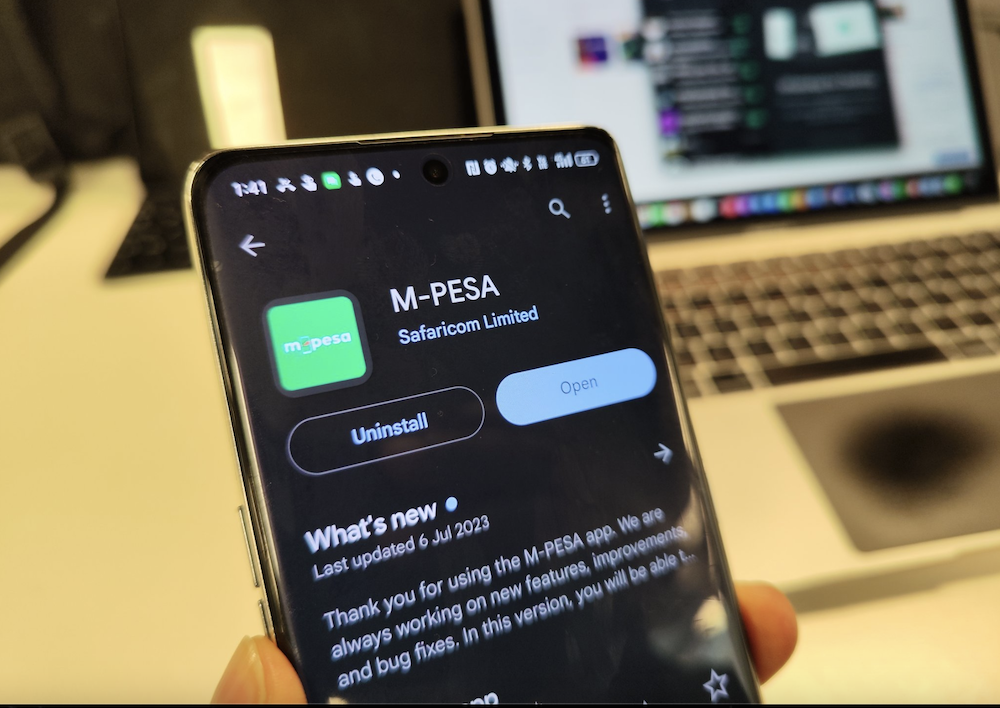
The mobile phone number has long served as the public face of Kenya’s mobile money economy. It appears on receipts. It flashes across merchant confirmations. Sometimes it travels further than the transaction itself.

That small identifier carries a surprising amount of exposure.
Now the system that made phone numbers central to everyday payments is preparing to loosen that visibility. Safaricom has secured approval from Central Bank of Kenya to introduce M-Pesa number masking, a feature that hides the full mobile number when customers pay merchant Till or PayBill accounts through M‑Pesa.
On paper the change sounds technical. In practice it touches the social mechanics of Kenya’s most used payment system. The phone number has always doubled as identity, account reference, and sometimes an informal customer database. Masking it alters that dynamic in subtle ways.
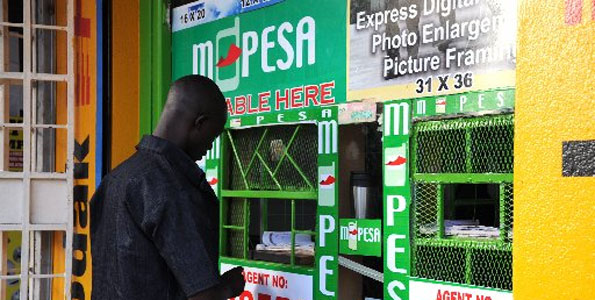

The regulator approved the rollout in February, ending a long internal process between the telecom operator and financial authorities. The feature will hide the payer’s full number from merchants during transactions, exposing only partial digits. Recipients who need the complete number will have to request it through the system, after which the sender decides whether to reveal it.
For a platform that processes billions of transactions each year, even a small change in how information travels carries weight.

The Phone Number as Kenya’s Payment Identity
For most of the 17 years since launch, M‑Pesa treated the phone number as the simplest anchor for a financial account. It was easy to remember. It mapped cleanly onto SIM registration records. Merchants adopted it as a quick reference for customer follow-ups.
Over time that convenience created its own side effects.
A payment to a Till or PayBill number generates a confirmation message showing the sender’s number alongside the amount and transaction code. The system never required merchants to store or use that information. Many did anyway.
Small retailers sometimes keep informal lists of repeat customers. Some contact buyers after a transaction to confirm orders or arrange delivery. Others harvest numbers for marketing messages. In the worst cases, phone numbers leak into fraud networks that target mobile money users.
The exposure rarely happens through a single dramatic incident. It accumulates through routine transactions.
M-Pesa number masking interrupts that habit. A merchant receiving payment will see confirmation of the amount and code, but not the complete number behind it.
The identifier that built Kenya’s mobile money culture is still there. It just becomes less visible.
A Regulatory Conversation That Has Been Building Since 2019
The approval did not arrive in isolation. Kenya’s regulatory environment has been tightening around personal data for several years.
The country’s Data Protection Act 2019 established a principle that organizations should collect only information required for a service. Phone numbers displayed during merchant payments occupy an awkward corner of that rule. They help merchants recognize customers. Yet they are not strictly necessary to complete a transaction.
The regulator had already been nudging financial service providers in this direction. In August 2024 the Central Bank introduced fresh guidance for non-deposit-taking digital lenders. Those rules required adherence to the Data Protection Act and demanded technology policies covering encryption standards, access controls, application security, and backup procedures.
Within that broader compliance environment, number masking became the next logical step.
The telecom operator approached the regulator with a technical solution that hides the sender’s full number while preserving the core transaction record. The regulator approved the approach but attached several conditions.
Customer education will be required before rollout. Safaricom must monitor user feedback, address complaints, and submit monthly reports to the Central Bank. Any future modifications must comply with Kenya’s national payment system framework.
That oversight reflects how central M-Pesa remains to the financial system. When a single platform carries daily commerce for millions of people, design changes attract regulatory scrutiny.
Merchant Payments Enter a New Phase
Merchant payments sit at the center of the M-Pesa ecosystem.
Kenya has hundreds of thousands of Till and PayBill accounts used by supermarkets, pharmacies, hardware shops, restaurants, and individual traders. Many rely on the visibility of phone numbers to track customers or reconcile orders.
Masking removes that direct line of sight.
The feature introduces a request mechanism where a merchant can ask the system to reveal the full number of a payer. The customer decides whether to allow it. Consent becomes part of the transaction.
That structure introduces a small friction point. For merchants who depend on direct contact with customers, it may feel inconvenient at first. Some will adapt by relying more heavily on order numbers or digital receipts instead of phone numbers.
Others may simply move their customer records into formal channels such as e-commerce platforms or point-of-sale software.
The adjustment could be subtle but widespread. Kenya’s informal merchant economy has grown alongside mobile money, often with little separation between payments and personal data. Number masking begins to draw a clearer line.
Fraud, Social Engineering, and the Long Tail of Exposure
Mobile money fraud rarely relies on technical vulnerabilities alone. It thrives on human familiarity.
A fraudster who obtains a phone number linked to past payments can craft convincing messages. The script often references a recent transaction, a mistaken transfer, or a supposed refund. The victim sees a familiar payment code or merchant name and assumes the request is legitimate.
Removing visible phone numbers from merchant confirmations reduces one of the easiest entry points for that tactic.
Kenya’s communications regulator has welcomed privacy tools that limit exposure of personal identifiers in digital services. The view from regulators is straightforward. The less unnecessary data circulates, the harder it becomes for fraud networks to build convincing narratives.
Number masking does not eliminate fraud. Mobile money scams evolve constantly. Yet reducing the spread of raw identifiers narrows the raw material that fraud schemes rely on.
A Subtle Cultural Adjustment for M-Pesa Users
There is also a social dimension to the change.
Kenyan consumers are accustomed to seeing their phone numbers appear in transaction confirmations. It provides reassurance that the system recognized the correct account. Some customers even check the message before leaving a shop counter.
Masking alters that familiar pattern.
Users will still receive confirmation messages showing the payment amount and transaction code. The difference lies in what the merchant sees on the other side. The payer retains more control over personal details.
In practical terms the change asks customers to think about consent in a place where it rarely existed before.
That could take time to settle into everyday behavior. Many people will simply ignore the option to reveal their full number unless a merchant requests it. Others may prefer to keep it hidden by default.
The point is not the individual decision. It is the new expectation that personal data should not travel automatically with every payment.
The Platform at the Center of Kenya’s Digital Economy
Any modification to M‑Pesa carries wider implications because the platform functions as more than a payment tool.
It is a savings channel. A lending pipeline. A commerce network. A gateway for digital services.
At the same time the platform has accumulated layers of regulation as its role expanded. Financial oversight from the Central Bank intersects with data protection rules, telecom regulations, and consumer protection frameworks.
Number masking sits at the intersection of those overlapping responsibilities. It is partly a privacy adjustment and partly a structural correction to how information flows inside the payment ecosystem.
Safaricom will need to roll the feature out gradually while educating customers and merchants who rely on the current system.
The company’s task will not be technical alone. It must persuade millions of users that a less visible phone number still supports the trust that made mobile money dominant in the first place.
A Payment System That Keeps Rewriting Its Own Rules
Mobile money in Kenya has never been static. The early years focused on simple transfers between individuals. Later came merchant payments, savings tools, credit services, and digital commerce layers.
Each stage introduced a new balance between convenience and control.
Number masking represents another step in that long evolution. The design of the system begins to treat personal identifiers with more restraint than before.
That may feel overdue to privacy advocates. It may feel inconvenient to some merchants. For the payment system itself it represents something else entirely.
A recognition that even the smallest piece of data can travel further than intended once millions of transactions begin to flow through a network.
And once that flow reaches the scale of Kenya’s mobile money economy, the architecture of privacy becomes part of the infrastructure itself.
Go to TECHTRENDSKE.co.ke for more tech and business news from the African continent and across the world.
Follow us on WhatsApp, Telegram, Twitter, and Facebook, or subscribe to our weekly newsletter to ensure you don’t miss out on any future updates. Send tips to editorial@techtrendsmedia.co.ke


