
M-Pesa Share Trading Lifts NSE Transactions 3.8 Times and Puts Small Investors at the Center
M-Pesa share trading is drawing first-time investors into the NSE, and price formation is starting to reflect it

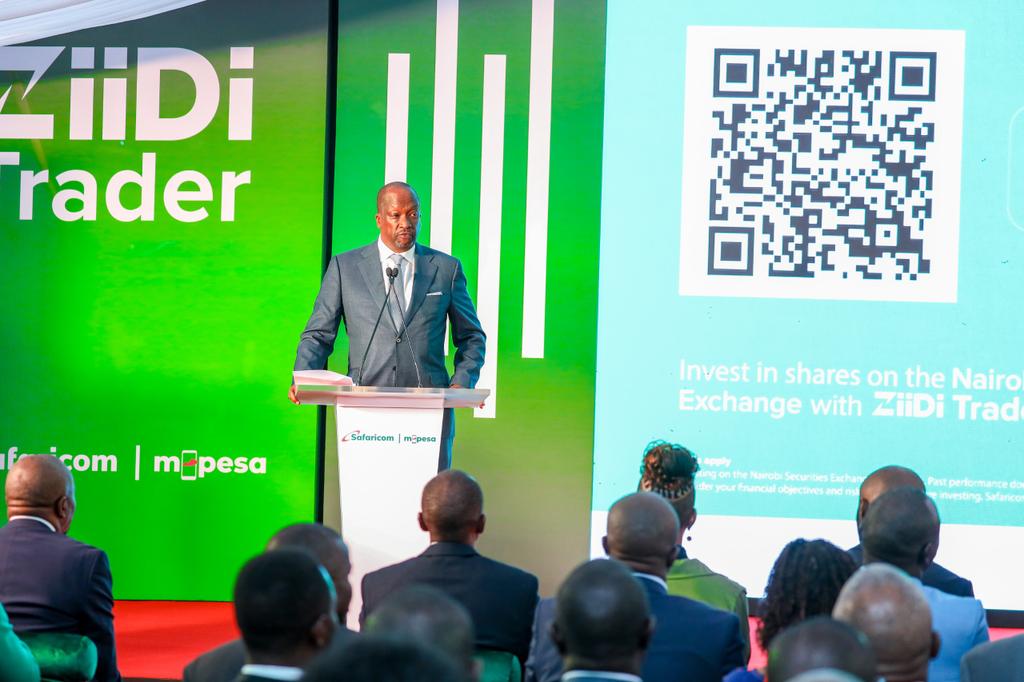
Daily transactions at the Nairobi Securities Exchange climbed to 26,169 this week, up from 6,761 before February 4. The jump followed the rollout of M-Pesa share trading through Ziidi Trader. Activity multiplied 3.8 times in a matter of days.

On February 9 alone, 7,962 of 14,300 equity deals were processed via M-Pesa. That is 55 percent of all trades by count. By value, those mobile transactions accounted for about 2 percent of total turnover.
The imbalance is the point. The exchange has not been flooded with capital. It has been flooded with participation.
For years, the NSE has moved in long pauses. Counters would sit at fixed price levels for weeks, sometimes months, waiting for institutional conviction. Now the tape flickers more often. Small tickets. Many of them. A market that once felt sparse now feels populated.


Price Discovery Gets Messy, and That Is the Idea
Micro-transactions tend to be dismissed as noise. In practice, they alter how prices form. When hundreds of small buy orders cluster around a counter, they create pressure at specific levels. That pressure does not override large funds, but it nudges direction.
Traders report that larger blocks are now following cues established earlier in the session by retail flows. A pattern is emerging: small trades edge a price higher, institutional desks respond, and momentum gathers. It does not always last. Still, it reduces the inertia that has long defined Kenyan equities.
Consider the week to February 13. Market capitalization rose 6.9 percent to Sh3.419 trillion. Investor paper wealth expanded by Sh220.4 billion. Heavyweights such as Safaricom, Equity Group, KCB Group and Stanbic Holdings carried much of that move.
It would be simplistic to credit mobile traders alone. Earnings expectations, interest rate outlooks, and foreign positioning remain decisive. Yet the timing is hard to ignore. The retail pulse arrived, and liquidity thickened.
Markets do not require every participant to be large. They require enough participants to keep prices alive.
Access Without a CDS Account
Ziidi Trader allows retail investors to transact without opening a Central Depository System account. A mobile wallet suffices. In a country where mobile money is woven into daily commerce, that design choice is not cosmetic. It collapses a layer of friction that once separated curiosity from execution.
The NSE has long pursued a target of 9 million retail investors, roughly 33 percent of Kenya’s adult population. That aspiration often felt detached from the mechanics required to achieve it. Brokerage onboarding, documentation, and minimum trade sizes discouraged casual entrants.
M-Pesa share trading compresses that process into a familiar interface. The stock market now sits alongside airtime purchases and bill payments. The psychological distance narrows.
What follows from that is less certain. Some users will experiment with Sh1,000 or Sh2,000 positions and stop. Others may build portfolios over time. Participation at scale does not guarantee durability.
Volume Without Weight
The data shows a stark divide. More than half of daily deals originate from mobile wallets, yet those trades represent roughly 2 percent of turnover value. Institutional money still dictates the bulk of capital movement.
Retail investors influence tempo more than magnitude. They quicken the rhythm of the market. They make it harder for prices to remain static. But they do not carry the financial mass required to sustain rallies unsupported by fundamentals.
This tension defines the present moment. A busy exchange is not automatically a deep one. Kenya’s equity market still depends on pension funds, insurers, and foreign flows for large allocations.
At the same time, frequency changes perception. When investors see 26,169 transactions in a day instead of 6,761, confidence in market activity strengthens. Activity breeds attention. Attention can translate into further orders.
Liquidity is partly mechanical and partly psychological.
Retail Power Meets Macro Reality
Kenya’s macro backdrop remains decisive. Interest rates, fiscal consolidation, currency dynamics, and corporate earnings will determine where prices settle over the next 12 months. Retail enthusiasm cannot override a weak earnings season or tightening credit.
Yet the exchange no longer appears detached from everyday savers. That cultural shift may be as important as the numeric one. A market that feels accessible is more likely to attract first-time participants. Some will exit after early losses. Others will stay, learning the discipline of holding through volatility.
If daily transactions stabilize above 20,000 over the coming quarters, brokerage models will adapt. Research coverage may broaden to accommodate retail interest. Investor education could move from peripheral initiative to central strategy.
If activity recedes toward 7,000 deals per day, the episode will still have demonstrated latent demand. Access was a bottleneck. Once removed, participation surged.
A Market That Feels Closer to Home
Kenya’s equity market has often felt distant from the informal and semi-formal economy that defines much of national commerce. Mobile money operates at the opposite end of that spectrum. It is embedded in transport fares, market stalls, school fees, payrolls.
By linking shares to that ecosystem, M-Pesa share trading places equities inside a familiar financial routine. The stock market no longer requires a separate ritual. It becomes another option on a handset.
That proximity may alter savings behavior over time. Younger investors who begin with small trades may graduate to larger allocations as income rises. Or they may treat equities as short term plays, amplifying volatility during market swings.
The early numbers show engagement. They do not yet reveal conviction.
What is clear is that the NSE’s order book now reflects a broader slice of Kenyan financial life. Thousands of small trades course through counters each day. Individually modest. Collectively influential.
In markets, scale does not always start with large cheques. Sometimes it begins with many small decisions made on a smartphone screen.
Go to TECHTRENDSKE.co.ke for more tech and business news from the African continent and across the world.
Follow us on WhatsApp, Telegram, Twitter, and Facebook, or subscribe to our weekly newsletter to ensure you don’t miss out on any future updates. Send tips to editorial@techtrendsmedia.co.ke

