
Kenyan Clean Cooking Startup KOKO Networks Abruptly Shuts Down Amid Carbon Credit Standoff

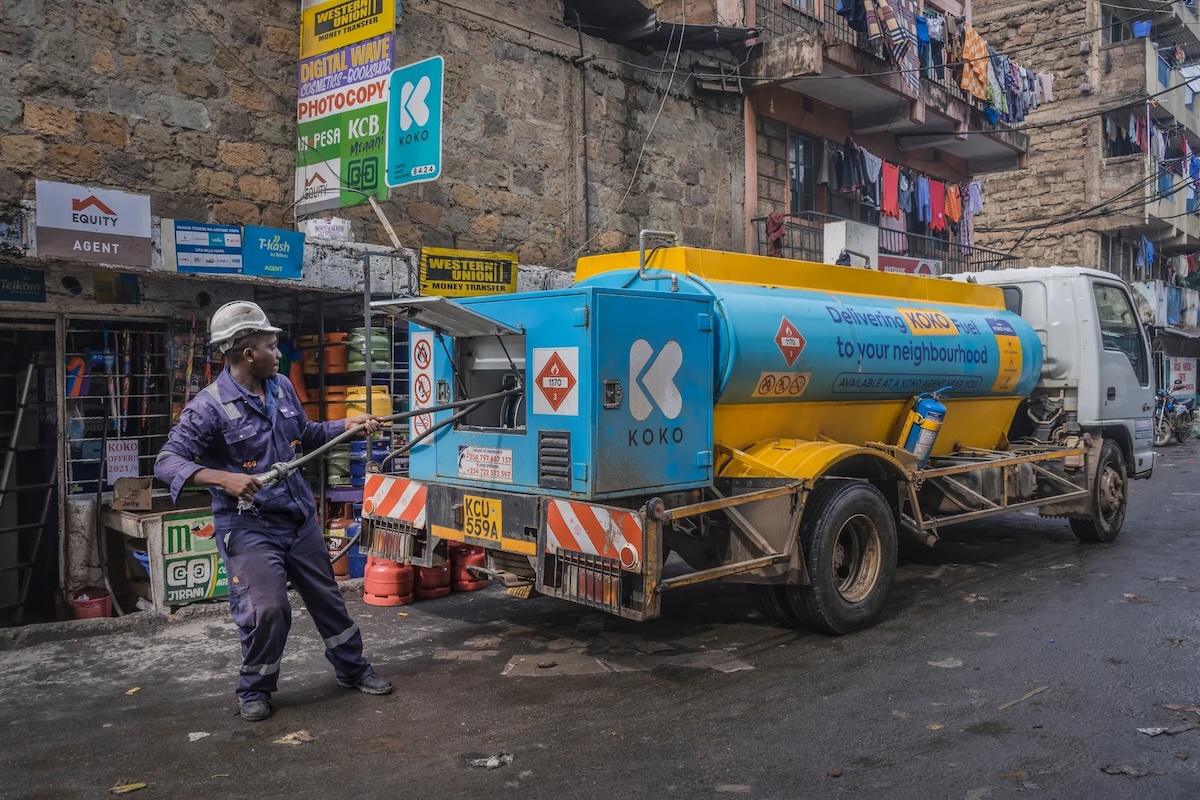
KOKO Networks, the Kenyan bioethanol cooking fuel provider, has ceased all operations effective immediately. The shutdown follows a protracted standoff with the Kenyan government over the refusal to issue a critical Letter of Authorisation for carbon credit sales.

The collapse of the startup, often cited as a poster child for climate finance in Africa, has left over 700 employees jobless and an estimated 1.5 million households stranded without their primary source of cooking fuel.
According to reports, employees were instructed via email not to report to work on Saturday, ending their contracts with immediate effect.
At the center of the crisis is a bureaucratic deadlock regarding Article 6 of the Paris Agreement. KOKO’s business model was uniquely dependent on carbon finance to subsidize the cost of living for the urban poor. By selling high-quality carbon credits to global buyers such as airlines under the CORSIA scheme, KOKO was able to retail its bioethanol fuel at KES 100 per liter, roughly half the market price of KES 200.


However, selling these credits to foreign buyers requires a Letter of Authorisation (LoA) from the host government. This document essentially waives the government’s right to claim those specific emission reductions towards its own national climate targets, preventing “double counting.”
Sources close to the negotiations told Africa Sustainability Matters that the Kenyan government refused to grant this authorisation. Without the LoA, KOKO was effectively barred from monetizing the carbon savings that funded its subsidies. A board member, speaking anonymously, stated that without the regulatory approval, the company was “facing immediate bankruptcy” and the “math simply didn’t work” anymore.
The impact of the shutdown was felt instantly across Nairobi, Mombasa, and other major urban centers. KOKO’s network of over 3,000 KOKO Point fuel ATMs, which serve as the primary energy source for millions of low-income residents, have gone offline.
The closure threatens to force 1.5 million households back to using charcoal and kerosene, dirtier fuels that KOKO Networks had successfully displaced. This reversal poses severe health risks due to indoor air pollution and threatens to accelerate deforestation, undermining the very environmental progress the government has championed.
For the 700 direct employees and the thousands of shopkeeper agents who earned commissions hosting the fuel ATMs, the news is financially devastating. The termination was abrupt, with no clear timeline for severance or asset recovery
The collapse is particularly jarring given KOKO’s recent milestones. Only a year ago, in early 2025, the company secured a $179.6 million guarantee from the World Bank’s Multilateral Investment Guarantee Agency (MIGA). The insurance was explicitly designed to protect against political risks, including breach of contract and regulatory shifts. It remains unclear if this policy will now be triggered to compensate investors.
Industry analysts warn that KOKO’s failure sends a chilling signal to the global climate finance sector. It highlights the extreme fragility of business models that rely on the complex and often shifting regulatory landscapes of international carbon markets. The standoff also exposes the tension between national climate goals (NDCs) and the private sector’s need to export carbon credits for revenue.
As of Saturday afternoon, Kenya’s Ministry of Energy and the Ministry of Environment have yet to issue a formal statement regarding the refusal of the authorisation or the subsequent blackout of the country’s largest clean cooking network.
[Secure Your Seat at Africa Tech Summit Nairobi 2026 | February 11–12 here] Use code TTRENDS10 at checkout to save 10% on your pass and join the leaders building Africa’s $1 trillion cross-border payment future.
Go to TECHTRENDSKE.co.ke for more tech and business news from the African continent.
Follow us on WhatsApp, Telegram, Twitter, and Facebook, or subscribe to our weekly newsletter to ensure you don’t miss out on any future updates. Send tips to editorial@techtrendsmedia.co.ke

