

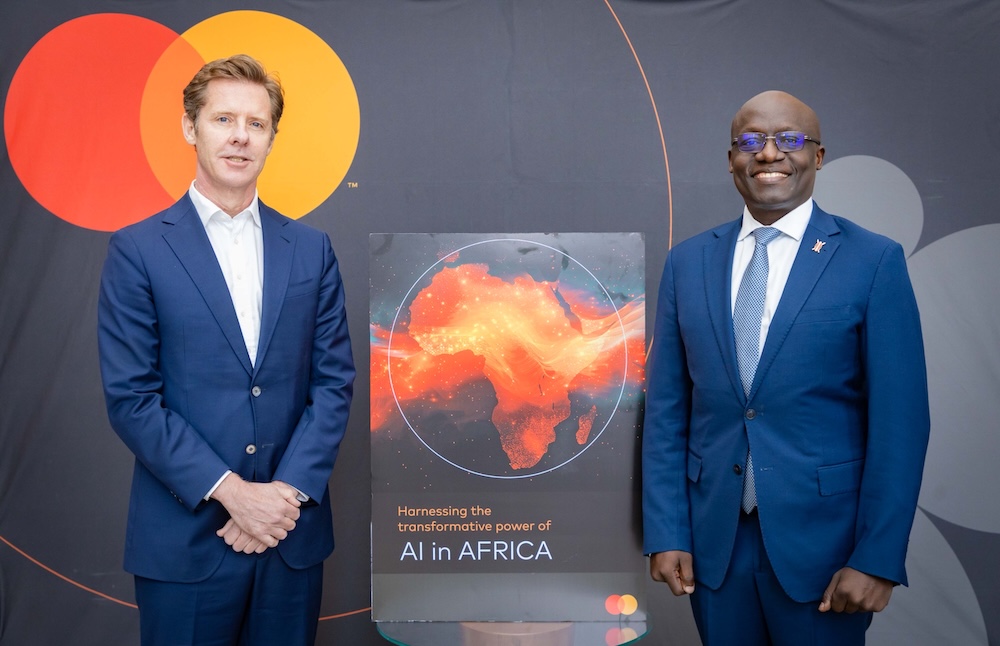
Africa’s artificial intelligence (AI) market is projected to grow from USD 4.5 billion in 2025 to USD 16.5 billion by 2030, according to a new whitepaper released by Mastercard.

Titled “Harnessing the Transformative Power of AI in Africa,” the report explores the continent’s readiness, opportunities, and roadmap for responsible AI adoption across key industries.
The whitepaper makes a strong case for multi-stakeholder collaboration and investment to ensure AI is deployed in a way that is inclusive, ethical, and locally grounded. It outlines how responsible AI can unlock transformative outcomes in agriculture, healthcare, education, energy, and finance, and play a pivotal role in job creation, financial inclusion, and digital transformation.
“AI is already reshaping lives across Africa, not just in labs, but in farms, clinics, and classrooms,” said Mark Elliott, Division President for Africa at Mastercard. “To unlock its full potential, we need investment in infrastructure, data, talent, and policy.”


The report highlights several critical areas where AI can drive meaningful change, including improved digital infrastructure, policy frameworks, local language processing, research and development, and access to capital. It also notes that AI could enable up to 230 million digital jobs by 2030 and significantly increase access to financial services through AI-powered credit scoring and fraud detection.
Greg Ulrich, Mastercard’s Chief AI and Data Officer, emphasized the importance of trust, saying, “AI is only as powerful as the trust behind it. At Mastercard, we’re committed to building AI that’s responsible, inclusive, and built to bring value to our customers and partners. This isn’t just innovation—it’s innovation with integrity.”

Country Highlights from the Report
South Africa leads the continent in AI infrastructure and readiness, attracting USD 610 million in AI-focused venture capital in 2023. The country is home to the Artificial Intelligence Institute of South Africa and plans to develop 300 AI startups and train 5,000 professionals by 2030. Total AI investment is expected to hit USD 3.7 billion by the end of the decade.
Kenya, often dubbed the “Silicon Savannah,” is emerging as a regional AI innovation hub. Local applications like Tala use AI for credit scoring, while Jacaranda Health’s UlizaLlama chatbot offers maternal healthcare advice in five local languages. The government’s National AI Strategy (2025–2030) aims to position Kenya as a leader in AI research, commercialization, and policy development.
Nigeria ranks second in Africa for AI startup activity and raised USD 218 million in venture capital last year. Companies like Kudi.ai and Rising Academies are using AI to drive financial access and personalized learning. Nigeria’s AI market is projected to reach USD 1.4 billion by 2025, supported by strong public-private collaboration.
Morocco is advancing AI adoption in healthcare, energy, and agriculture, supported by academic institutions like Mohammed VI Polytechnic University and initiatives such as the MoroccoAI Annual Conference. Its Digital 2030 strategy targets USD 1.1 billion in AI investment and the creation of 240,000 digital jobs. However, the report warns that challenges like data fragmentation and regulatory inconsistencies could widen the digital divide.
The whitepaper draws on insights from leading African technologists, policymakers, entrepreneurs, and international organizations including UNESCO and the African Center for Economic Transformation. It calls for a unified approach involving governments, private sector players, and global partners to ensure AI development is ethical, equitable, and impactful.
As Africa’s digital economy continues to expand, Mastercard emphasizes that AI, when responsibly developed and deployed, can become a catalyst for sustainable, inclusive growth across the continent.

Go to TECHTRENDSKE.co.ke for more tech and business news from the African continent.
Follow us on WhatsApp, Telegram, Twitter, and Facebook, or subscribe to our weekly newsletter to ensure you don’t miss out on any future updates. Send tips to editorial@techtrendsmedia.co.ke
TechTrends Media Podcasts


