Panther Lake Might Be the Chip That Decides Whether Intel Still Matters in the Laptop World
Panther Lake is being treated as a fresh start, but the industry has a long memory and limited patience


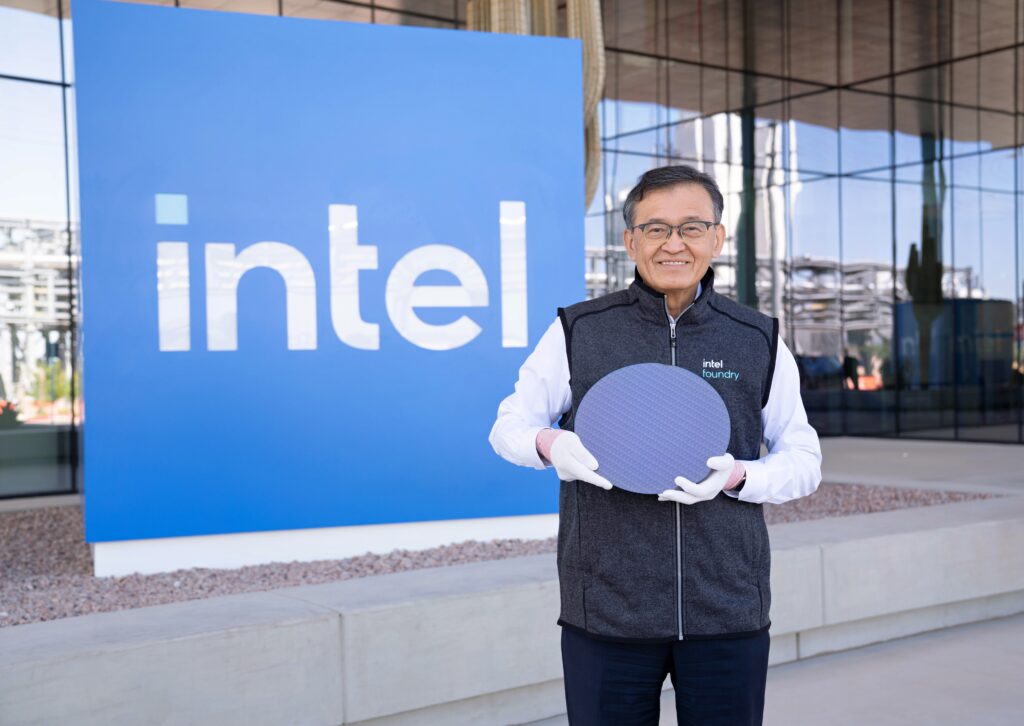
Panther Lake landed in public view this week as more than a parts announcement. It reads like a test — of process tech, of a modular chip strategy, and of whether Intel can translate lab wins into laptops people actually buy. The chips are the first client processors Intel says are built on its new 18A node, and Intel is pointing to production at its Fab 52 in Arizona as proof that the foundry side of the company can move from talk to volume.

What Panther Lake really is (and what it is not)
Under the marketing hood, Panther Lake is an evolution of several ideas Intel has been sketching for the last few product cycles. It uses a multi-tile design: a compute tile manufactured on Intel 18A, a graphics tile that may be made on Intel 3 or TSMC nodes depending on the SKU, and a platform controller tile built externally. That mix matters because it shows Intel leaning into modular assembly instead of trying to do every step in-house. The configuration choices are precise: there are smaller parts with eight CPU cores and larger ones with 16 CPU cores, and the top integrated graphics option packs a 12-core Xe3 GPU with hardware ray tracing.
Taken on its own, the hardware list is familiar. The difference this time is where the chips are being made and how Intel frames the trade-offs. If you were paying attention to Lunar Lake and Arrow Lake, this is Intel attempting to stitch the best parts of both into a single family. That raises obvious questions about cost, thermal envelopes, and whether OEMs will trust it enough to redesign their lines around the new chips.
Where the claimed gains come from
Intel presented comparative figures that look substantial: the new P-cores and E-cores on 18A are said to deliver lower power for similar single-thread work, and higher multi-thread throughput at comparable power to Lunar Lake. On the graphics side Intel is pitching over fifty percent more GPU throughput than the previous generation iGPUs, driven by the Xe3 architecture and software tricks like XeSS 3. Those are headline numbers, and they matter — until you see them under a microscope (or in the battery life column).


Reality will hang on two things. First, power management in the real world. Intel’s charts show efficiency gains, but some of those slides lack clear axes and units; interpret with care. Second, system-level choices. A chip that looks promising in a controlled spec test can turn very ordinary once an OEM picks a cooling solution, a screen with high refresh, or a power profile tuned for marketing rather than runtime. Put differently, Panther Lake brings headroom; whether that headroom becomes extra battery life, higher sustained clocks, or just better burst performance is up to laptop makers.
Packaging, partners and the new geography of making chips
One of the quieter but most consequential facts is manufacturing geography. Only the compute tile is slated to be produced on Intel 18A at Fab 52. Other tiles use different process partners and nodes. That’s not a sign of weakness alone; it’s modular pragmatism. But it does expose Intel, once again, to the complexities of coordinating multiple fabs and yields across vendors. The packaging tech — Foveros and a coherent cross-tile fabric — is mature enough now that mixing wafer sources is doable. The catch is yield curves and supply timing. If the GPU tile is delayed at a partner, or if yields for the compute tile fall short, OEM roadmaps compress quickly.
Fab 52’s ramp is central to Intel’s message. The company says Panther Lake is already in production there and that the facility will reach higher volume later this year. That matters to national industrial strategy as much as it does to product cycles — having 18A capacity inside the U.S. is a material shift for the supply chain. But again, production does not equal smooth, long-term supply at acceptable margins. Investors and OEMs will watch not just wafers out the door, but the scrap rates and per-chip economics.
What this could mean for laptops and handhelds
The chips are small enough, Intel argues, to appear in handheld gaming PCs as well as in thin laptops. That claim is plausible. A 12-core Xe3 iGPU paired with intelligent power steering — where background threads are guided to E-cores to free up budget for the GPU — would improve sustained gaming on small systems. Intel also showed a precompiled shader distribution system, similar in concept to what Valve and Microsoft have experimented with, meant to reduce stutter by shipping shader caches from the cloud. In practice that kind of software-plus-hardware approach can reduce variance, but it relies on drivers, cloud services and user opt-in.
If OEMs buy into the idea, we may see a wave of thinner machines that feel faster in everyday use without a big battery penalty. If OEMs balk, or price premiums bite, Panther Lake will be another interesting option in a crowded market. The outcome depends on product engineering more than a single chip spec.
The open questions that matter
Numbers on slides are a start, not a finish. The two big unknowns are price and availability. Intel has given a broad window: first SKUs late in the year, wider availability early in 2026. That slot is tight for some OEM planning cycles and for seasonal retail, and small timing slips here ripple into inventory and pricing decisions.
A second question is margins. New process nodes are expensive to develop and to run. Intel’s narrative about domestic manufacturing is politically resonant, but it also raises costs relative to competitors who outsource volume to foundries with different cost structures. If Panther Lake’s bill of materials pushes machines higher in price, adoption will be uneven. Finally, software maturity matters. New NPUs and image pipelines are useful only if OS and application support catch up; drivers and middleware will shape whether the NPU becomes a real differentiator or a spec-list novelty.
Two realistic near-term outcomes
Here are two plausible, concrete paths to watch for.
- One: relatively rapid adoption. OEMs that compete on thin-and-light feel will tune designs to harvest Panther Lake’s efficiency and iGPU gains. Early reviews show improvements in mixed workloads and lighter gaming. In this path, Intel reclaims some share in the premium mobile segment because systems feel better in everyday tasks and because integrated graphics close the gap for casual gamers.
- Two: slow, measured roll-out. OEMs treat Panther Lake like any generational refresh and introduce it selectively. Thermals and costs limit the number of form factors that benefit. Momentum accrues more slowly and Intel’s narrative about process leadership becomes a multi-quarter story rather than a single-season success.
- There is a third, smaller possibility: Panther Lake becomes something of a niche darling for handheld makers and edge devices, while mainstream laptops continue a more conservative cadence. That outcome would still be commercially meaningful, but it would look different from the broad platform revival Intel is pitching.
How to judge success, and what to watch next
Look at three signals in the coming months. First, careful, repeatable battery and thermal tests from independent reviewers. Second, shipping devices and OEM configurations: who uses the top GPU SKU, and at what price. Third, yield and supply transparency from partners and from Intel itself; statements about Fab 52 capacity are one thing, actual units shipped to OEMs are another. The pace at which software and driver updates roll out will also reveal how quickly Panther Lake’s extra hardware potential turns into user-facing gains.
My half-educated bet
If forced to pick a direction, I would expect Panther Lake to land unevenly. Some laptops will show real improvements, especially in sustained mixed workloads and in integrated graphics, while others will struggle with thermal or price constraints. Intel’s biggest success would not be winning every spec race; it would be convincing OEMs to push for designs that exploit the chip’s strengths. That requires coordination, and coordination costs money. Whether that investment pays off depends on demand elasticity — in short, will buyers pay for machines that are measurably better in everyday use, or will they chase headline specs instead.
Why this matters beyond chips
Panther Lake is a technical product, but it is also a test of industrial strategy. Bringing 18A production onshore changes negotiating leverage, geopolitical exposure, and long-term control over the manufacturing roadmap. For engineers and for markets, it is technical progress. For policymakers and supply chains, it is a small experiment in reshaping where chips are made. For users, it will only matter if the promises translate into machines that feel better and last longer on a single charge.
If you want a tight explainer for readers who care about upgrade timing, or a device-buying guide once the first reviews are out, I can write that next. Or, if you prefer, I’ll marshal a short checklist showing what to look for in Panther Lake laptops when they hit store shelves.
Go to TECHTRENDSKE.co.ke for more tech and business news from the African continent.
Mark your calendars! The GreenShift Sustainability Forum is back in Nairobi this November. Join innovators, policymakers & sustainability leaders for a breakfast forum as we explore sustainable solutions shaping the continent’s future. Limited slots – Register now – here. Email info@techtrendsmedia.co.ke for partnership requests.
Follow us on WhatsApp, Telegram, Twitter, and Facebook, or subscribe to our weekly newsletter to ensure you don’t miss out on any future updates. Send tips to editorial@techtrendsmedia.co.ke
TechTrends Media Podcasts

